
Schmaltz for Skin: Why Chicken Fat Is the Original Moisturizer
Before modern moisturizers existed, your grandmother's kitchen held the secret to soft skin. Chicken fat—known as schmaltz in Jewish cooking—was the original multi-purpose balm for dry hands, cracked heels, and even minor burns.
Today, this traditional remedy is making a comeback. But what makes chicken fat different from plant oils or beef tallow? And why does its unique texture make it easier to use than other animal fats?
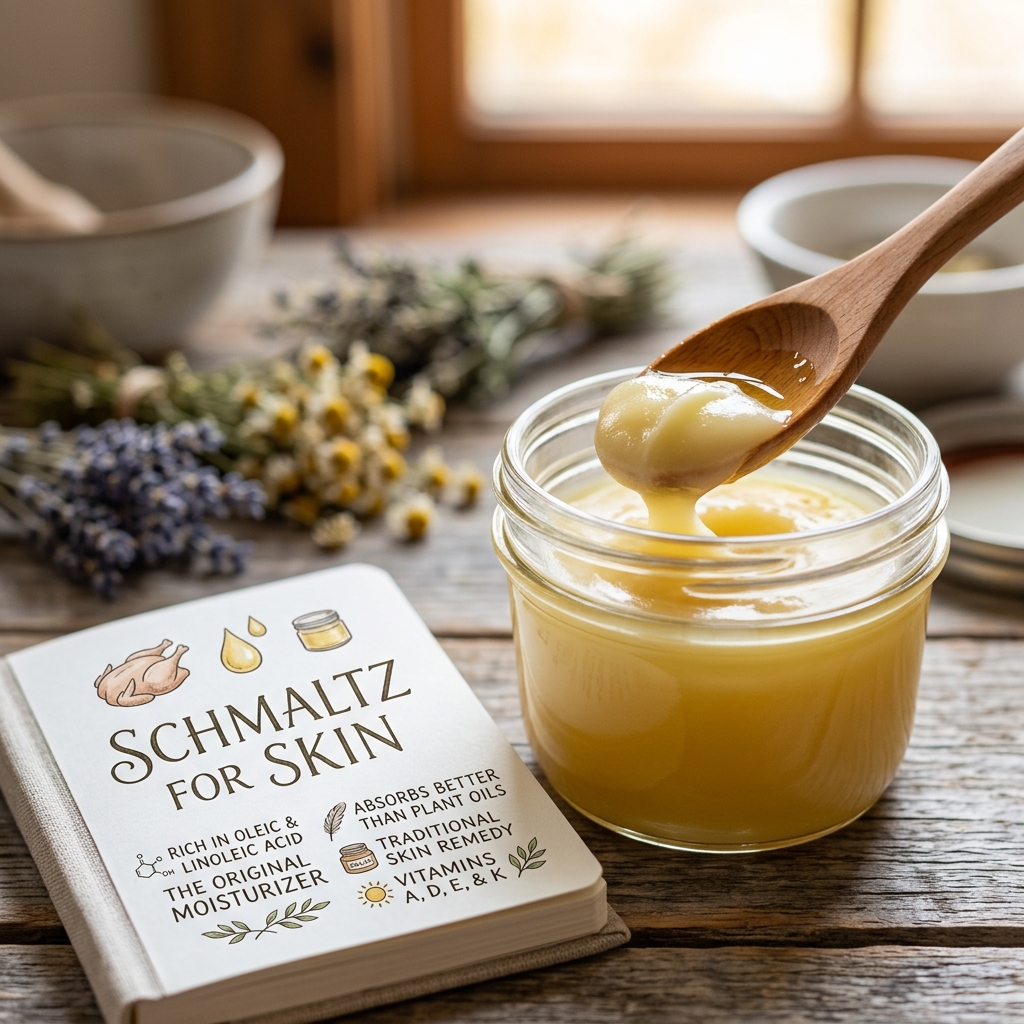
What Makes Chicken Fat Different from Other Animal Fats?
Chicken fat has a unique fatty acid profile that sets it apart from beef tallow and lard:
- Higher in linoleic acid: Around 20-25% linoleic acid (omega-6) compared to tallow's 3-5%. This makes it more similar to human sebum and better for acne-prone skin.
- Rich in oleic acid: About 40-45% oleic acid (omega-9), which helps restore the skin barrier and lock in moisture.
- Lighter texture: Unlike tallow, chicken fat stays pourable at room temperature and absorbs quickly without a heavy, waxy feel.
Traditional Uses Across Cultures
Chicken schmaltz has been used for centuries in:
- Jewish cuisine: As cooking fat and skin balm
- Eastern European folk medicine: For chapped hands, dry elbows, and minor burns
- Middle Eastern traditions: Mixed with honey or herbs for wound healing
Unlike modern creams filled with preservatives and emulsifiers, schmaltz was a single-ingredient remedy that delivered real nourishment.
The Science: Fatty Acids & Vitamins
Chicken fat is rich in:
- Oleic acid: Restores the skin barrier and locks in moisture
- Linoleic acid: Supports skin repair and helps balance oil production
- Palmitic acid: Provides structure and emollience
- Vitamins A, D, E, and K: Protect, repair, and soften the skin
These fatty acids are similar to the lipids found in human skin, which is why chicken fat absorbs well and leaves skin soft and nourished rather than greasy.
The Unique Texture of Chicken Schmaltz
One of the things that makes chicken fat special is its texture. At room temperature it stays pourable and silky, almost like a rich oil. When stored in the refrigerator it hardens into a smooth balm-like consistency.
This makes it versatile — you can apply it directly from the jar as a liquid or chill it if you prefer a firmer salve.
How to Use Chicken Schmaltz on Your Skin
- As a body moisturizer: Apply to damp skin after your shower for maximum absorption
- For dry hands and cuticles: Massage a small amount into your hands before bed
- On cracked heels and elbows: Apply generously and cover with socks or gloves overnight
- As a salve base: Mix with beeswax and essential oils for a custom balm
- For minor burns or scrapes: Apply a thin layer to soothe and protect (not on open wounds)
Why Choose Our Organic Chicken Schmaltz
We craft our Organic Chicken Schmaltz fresh using traditional methods and organic sourcing. Unlike commercial skincare, it is:
- 100% natural with no additives
- Hand-rendered in small batches
- Packed with the natural nutrients your skin craves
- Multipurpose: use it as a skin balm, a base for salves, or even in traditional cooking
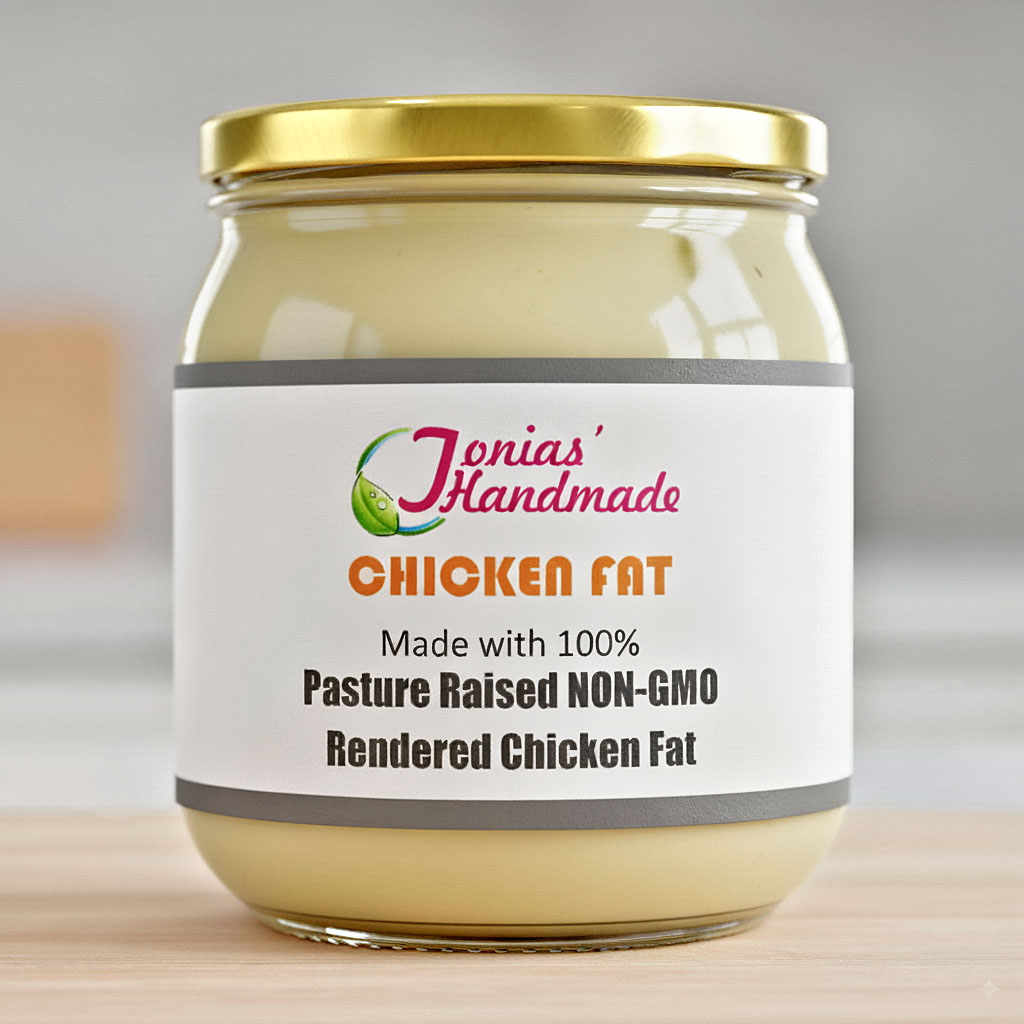
→ Shop Organic Chicken Schmaltz
Bottom Line
Chicken fat isn't just for cooking. It's a traditional skin remedy with a lighter, more absorbent texture than beef tallow. At room temperature it stays pourable and silky; in the fridge it firms up into a smooth balm.
If you want to try a simple, single-ingredient approach to skincare, Organic Chicken Schmaltz works as a body moisturizer, hand balm, or base for DIY salves.
Sometimes the oldest remedies are still the best.