
Vitamin C Guide: How to Choose and Use a Serum or Cream
Vitamin C is one of the most popular ingredients in skincare — and for good reason. It helps protect the skin from oxidative stress and supports a brighter, more even-looking complexion. But when it comes to choosing between a serum and a cream, questions quickly pile up: which one should you choose, when should you use it, will it tingle, and is it right for your skin?
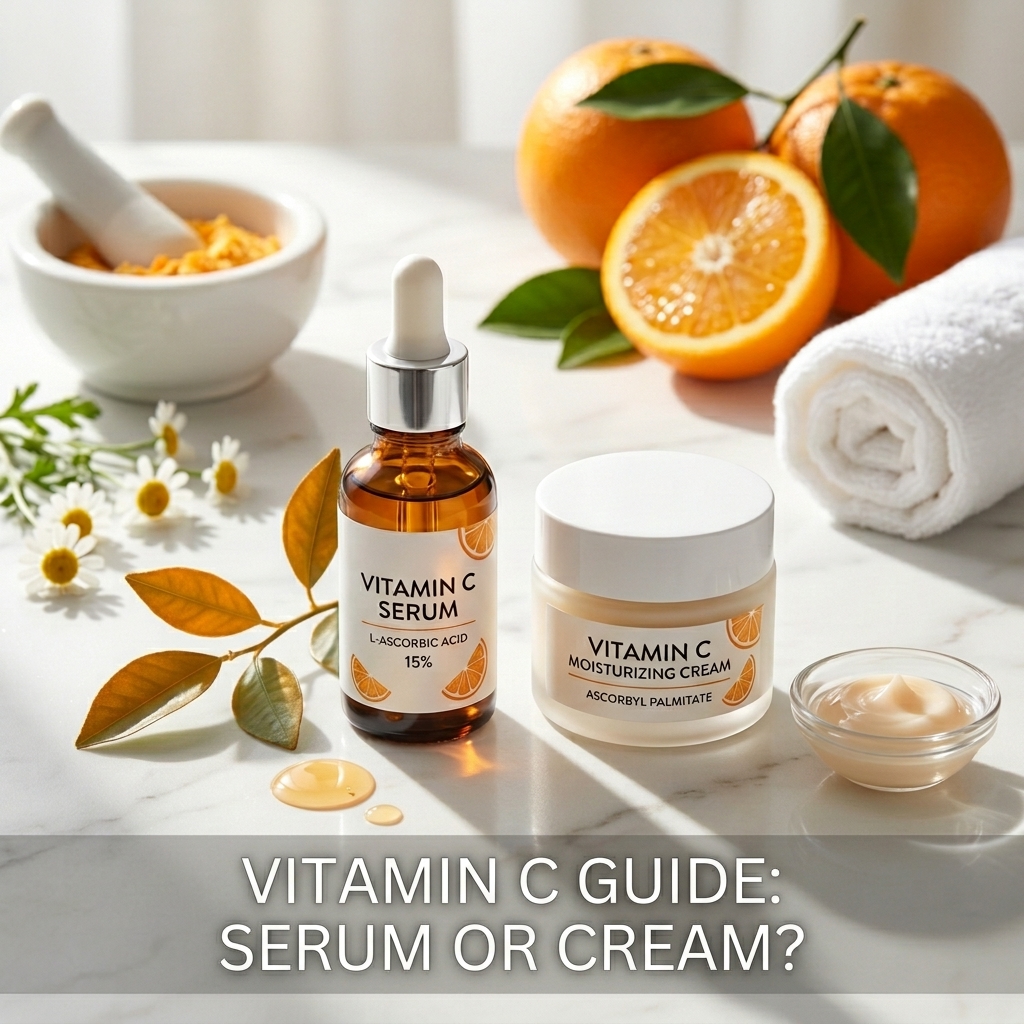
In this guide, you’ll find a simple, practical explanation of the difference between a Vitamin C serum and a Vitamin C cream, how to add it to your routine, and how to choose the form that suits you best.
What Vitamin C Does for the Skin
Vitamin C is an antioxidant ingredient that helps protect the skin from oxidative stress caused by environmental factors. In daily skincare, it is often used to support a brighter, more even-looking complexion.
It is not a product that changes your skin overnight. Consistency, together with daily sunscreen protection, is what helps support a gradually brighter and more comfortable-looking complexion.
Vitamin C Serum or Cream: Which Should You Choose?
The main difference is not only the texture, but also how each product fits into your routine.
Vitamin C Serum
A serum is a more targeted step in your routine. It usually has a lighter texture and is applied before your moisturiser. It is a good choice if you want to add a more concentrated dose of Vitamin C to your routine.
Serums with pure L-ascorbic acid are the most well-known in this category. They are potent, but they can be more demanding on the skin, especially if you are using Vitamin C for the first time.
Vitamin C Cream
A cream combines skincare with hydration. It is a gentler, everyday option, especially when it contains a stabilized form of Vitamin C, such as ascorbyl palmitate.
It is a good choice if you want to add Vitamin C to your routine without starting immediately with a stronger serum, or if you prefer a product that does two things at once: hydrates and cares for the skin.
Pure Ascorbic Acid or Stabilized Vitamin C?
Pure ascorbic acid (L-ascorbic acid) is the most well-known and potent form of Vitamin C. However, it is more sensitive to light and air, which is why packaging and storage play an important role.
Stabilized forms, such as ascorbyl palmitate, are generally gentler and more stable. They are a good option for those who want to introduce Vitamin C into their routine in a more gradual way.
There is no single “right” path for everyone. There is what suits your skin, your routine, and how familiar your skin already is with active ingredients.
When to Use Vitamin C
Vitamin C can be used in the morning or evening. Many people prefer to use it in the morning, as it works well as an antioxidant step before sunscreen.
If you are using a serum with pure ascorbic acid, morning is a very common choice. If your skin is more sensitive, you can start by using it a few times a week and gradually increase frequency.
Important: Vitamin C does not replace sunscreen. SPF remains essential during the day.
How to Add It to Your Routine
The basic order is simple:
- Cleanser
- Toner, if you use one
- Vitamin C serum, if you use one
- Moisturiser
- Sunscreen, during the day
If you are using a Vitamin C cream, it can be the final skincare step before sunscreen.
Tingling: When Is It Normal?
A light tingling sensation can occur, especially with serums that contain pure ascorbic acid and have a low pH. It is usually temporary and lessens as the skin becomes accustomed to the product.
If you experience strong burning, redness or discomfort that does not go away, stop using the product and consult a dermatologist. It is also a good idea to do a patch test before first use, especially if you have sensitive skin.
Vitamin C and Sensitive Skin
If you have sensitive skin, it does not mean you need to avoid Vitamin C completely. It means it is better to start carefully.
- Start with a lower concentration or a stabilized form.
- Use the product fewer times per week at first.
- Avoid combining it with several strong actives at the same time.
- Do a patch test before first use.
What It Combines With — and What to Avoid
Vitamin C combines well with hydrating ingredients such as hyaluronic acid and soothing ingredients such as aloe vera.
If you use acids or other strong actives, it is better not to combine them all at the same time. You can alternate them at different times of day or on different days to reduce the chance of irritation.
How to Choose a Concentration
With serums that contain pure ascorbic acid, concentration matters:
- 10%: a good starting point for beginners or sensitive skin.
- 15%: a balanced option for daily use.
- 20%: for those already accustomed to stronger Vitamin C products.
If you are unsure, always start with a lower concentration and increase gradually only if your skin tolerates it comfortably.
How to Choose the Right Product for You
- If you want a more targeted Vitamin C step: serum.
- If you want daily hydration with Vitamin C: cream.
- If you are a beginner or have sensitive skin: start with a gentler option.
- If you want a full routine: serum in the morning, cream afterwards.
See the Vitamin C Serum with Pure Ascorbic Acid
Frequently Asked Questions
Can I use Vitamin C every day?
Yes, as long as your skin tolerates it comfortably. If you are a beginner, start with fewer days per week and increase gradually.
Morning or evening?
It can be used at either time. Morning is a popular choice, especially before sunscreen.
Can I use a Vitamin C serum and cream together?
Yes. Apply the serum first and the cream afterwards, as a hydrating step.
Do I need sunscreen if I use Vitamin C?
Yes. Vitamin C does not replace sunscreen.
When will I see results?
Every skin is different. Consistency is more important than expecting immediate results.