
Curly Hair Needs Protein or Moisture? The Stretch Test
Your curls look great one day and like a frizz disaster the next. You've tried every product, but nothing works. Here's the truth: your curls don't need more products—they need the RIGHT balance of protein and moisture. And there's a 30-second test to figure out which one you're missing.
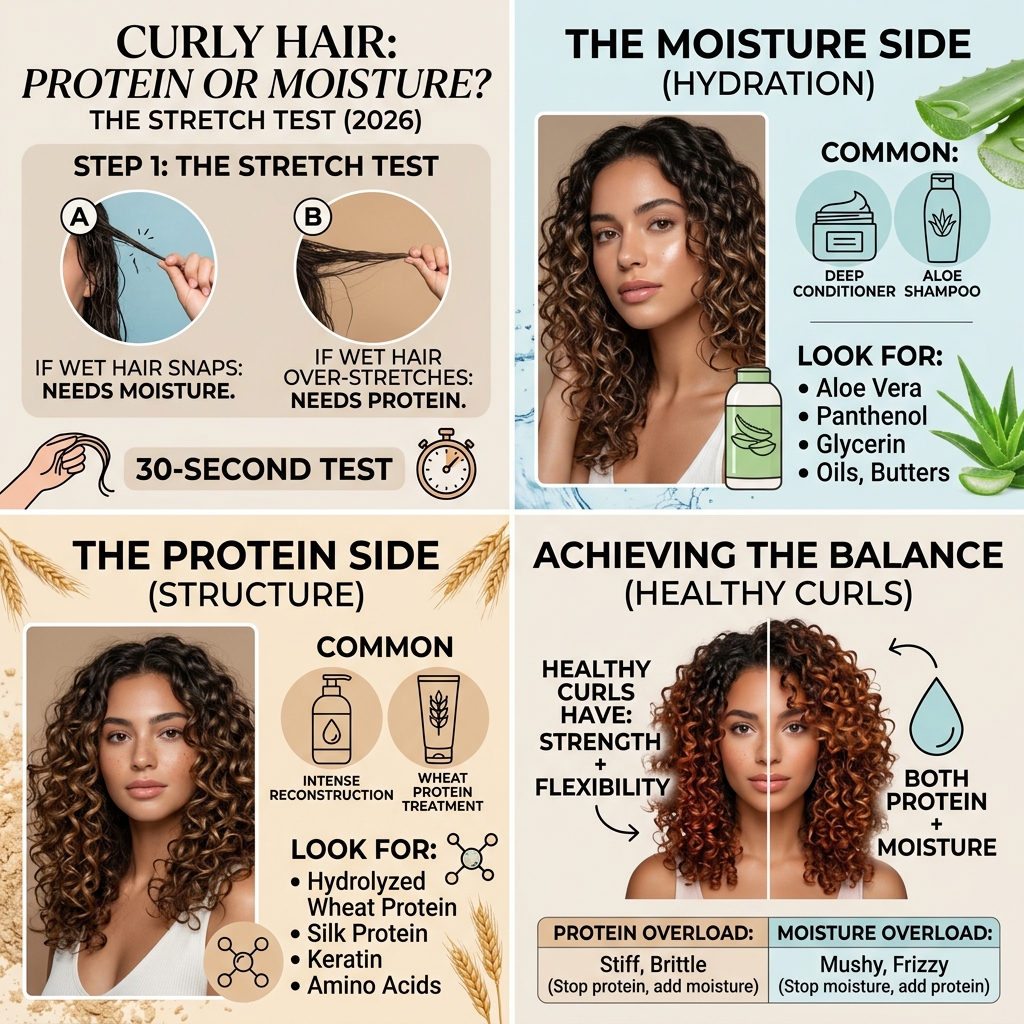
Curly hair has a personality of its own. It's expressive, bold—and often high-maintenance. The biggest struggle? Figuring out whether your curls are thirsty for moisture or begging for protein. Get this balance right, and your hair will bounce, shine, and thrive. Get it wrong, and you're left with frizz, breakage, or lifeless waves.
Here's how to tell what your curls really need—and how to feed them right.
Quick Answer: How to Tell What Your Curls Need
Do the Stretch Test: Take a wet strand of hair and gently stretch it. If it snaps quickly, your hair is dry and needs moisture. If it over-stretches and feels mushy, you likely need protein to rebuild structure. Most curls need moisture regularly and protein every 1–2 weeks.
The Moisture Side of the Equation
If your curls feel dry, frizzy, or rough, they're likely craving hydration. Moisture keeps hair soft, elastic, and defined. Without enough, curls become brittle and snap easily.
Look for ingredients like:
- Aloe Vera – hydrating and soothing; found in products like the Aloe Vera Shampoo, which is also sulfate-free to gently cleanse without stripping natural oils.
- Panthenol (Pro-Vitamin B5) – adds moisture, improves elasticity, and gives curls a natural shine boost.
- Glycerin – a humectant that pulls moisture from the air into your hair.
- Coconut Oil, Shea Butter, and Extra Virgin Olive Oil – seal in hydration and smooth the cuticle.
Top pick: Deep Conditioner Hair Mask
This ultra-nourishing mask is packed with moisture-heavy hitters—Coconut Oil, Shea Butter, Aloe Vera, Panthenol, and Extra Virgin Olive Oil. It's designed for dry, damaged, or color-treated curls that need serious hydration. Use once a week for smoother texture, less frizz, and bounce that lasts.
These formulas help restore softness and manageability, making curls easier to define and style—without the weight.
When Hair Needs Protein
On the flip side, hair that's too soft, limp, or mushy might be over-moisturized and lacking structure. That's where protein comes in—it reinforces the hair shaft, helps repair damage, and brings back strength.
Signs your curls might need protein:
- Hair stretches too much before breaking
- Curls won't hold their shape
- You've recently bleached, dyed, or heat-styled
- Excessive breakage
Look for protein-rich ingredients like:
- Hydrolyzed Wheat Protein – small enough to penetrate the hair shaft and boost strength
- Silk Protein, Keratin, or Amino Acids
Top pick: Intense Hair Reconstruction: 10% Wheat Protein
This protein treatment is built for serious repair. With a high concentration of Hydrolyzed Wheat Protein, it strengthens weak strands, reduces breakage, and helps curls bounce back after chemical or heat damage. Best used once every 1–2 weeks.
Protein Overload vs Moisture Overload: What's the Difference?
Too much of either can throw your hair off balance. Here's how to tell the difference:
| Symptom | Protein Overload | Moisture Overload |
|---|---|---|
| How hair feels | Stiff, straw-like, brittle | Soft, mushy, overly stretchy |
| Curl pattern | Loose, won't hold shape | Undefined, frizzy |
| Breakage | Snaps with little stretch | Stretches then breaks |
| Fix | Stop protein, deep condition with moisture | Stop moisture, use protein treatment |
The Balancing Act: Protein + Moisture
Healthy curls need both. Protein provides structure; moisture adds flexibility. Too much of either can throw your hair off balance—resulting in stiff, brittle curls (protein overload) or mushy, undefined hair (moisture overload).
Some products deliver both:
- Hair Conditioner with Lightweight Moisturizing Low Porosity – includes aloe, glycerin, panthenol, and light conditioning agents that hydrate and support elasticity.
- Cleansing Conditioner – combines aloe vera, vegetable protein, and botanical emollients to cleanse and condition in one step.
How to Know What Your Hair Needs
Here's a simple test:
Stretch Test:
On wet hair, stretch a strand.
- If it snaps quickly, it's dry and needs moisture.
- If it over-stretches and feels gummy, it needs protein.
Also factor in your habits and environment:
- If you use heat tools, dye your hair, or swim regularly → you'll likely need protein.
- If you're in a dry climate or use a lot of gels and leave-ins → moisture might be the missing link.
Final Thought
Curly hair doesn't just want one thing—it needs a rhythm. Sometimes you hydrate. Sometimes you rebuild. Listening to your curls and learning what they respond to is key. Start by giving them what they ask for, not just what's trending. And when in doubt? Moisture first. Then add protein when your curls lose their shape.
Curly Hair Care FAQ: Protein vs. Moisture
Q: How do I know if my curly hair needs moisture or protein?
Do the Stretch Test:
- If a wet strand snaps quickly, your hair is dry and needs moisture.
- If it stretches a lot and feels mushy, you likely need protein to rebuild structure.
Q: What are signs my curls need more moisture?
- Frizz and rough texture
- Hair feels dry or brittle
- Difficulty detangling
- Lack of shine or bounce
Q: What ingredients should I look for to moisturize curly hair?
- Aloe Vera (especially in sulfate-free formulas like Aloe Vera Shampoo)
- Panthenol (Pro-Vitamin B5)
- Glycerin
- Coconut Oil, Shea Butter, Extra Virgin Olive Oil
Q: What's a good product for deep moisture?
Try the Deep Conditioner Hair Mask. It includes Coconut Oil, Shea Butter, Aloe Vera, Panthenol, and Extra Virgin Olive Oil to restore hydration, softness, and manageability.
Q: What are signs my curls need protein?
- Hair feels overly soft or stretchy
- Curls don't hold shape
- Recent color, bleach, or heat damage
- Excessive breakage
Q: What ingredients help strengthen curls with protein?
- Hydrolyzed Wheat Protein
- Silk Protein
- Keratin
- Amino Acids
Q: What's a good protein treatment for curly hair?
The Intense Hair Reconstruction: 10% Wheat Protein treatment strengthens hair, reduces breakage, and revives curl structure—especially after chemical or heat damage.
Q: Can I use both protein and moisture treatments?
Yes. Balance is key. Most curls need moisture regularly, and protein every 1–2 weeks (or as needed based on styling, damage, and hair response).
Q: What if I'm not sure what my hair needs?
Start with moisture. If that doesn't restore curl strength or shape, add a light protein treatment into your routine.
Q: How often should I use protein treatments on curly hair?
For most curls, once every 1–2 weeks is enough. If your hair is severely damaged (from bleach, dye, or heat), you can use it weekly. For healthy curls, once a month may be sufficient.
Q: Can protein treatments make hair worse?
Yes, if overused. Too much protein leads to "protein overload"—hair becomes stiff, straw-like, and prone to breakage. If you notice these symptoms, stop protein treatments and focus on deep conditioning with moisture.