
Beef Fat on Your Face? Why Tallow Skincare Is Trending in 2026
Beef fat on your face? Sounds weird, right? But tallow—an ancient cooking fat—is having a major skincare moment in 2026. From carnivore dieters to clean beauty lovers, everyone's swapping their moisturizers for rendered animal fat. Here's why.
Tallow is making a comeback—and it's not just for frying anymore. This traditional fat, rendered from grass-fed animals, is now being praised for its incredible benefits in both cooking and skincare. If you're trying to clean up your pantry and your skincare routine, tallow might be the key ingredient you've overlooked.
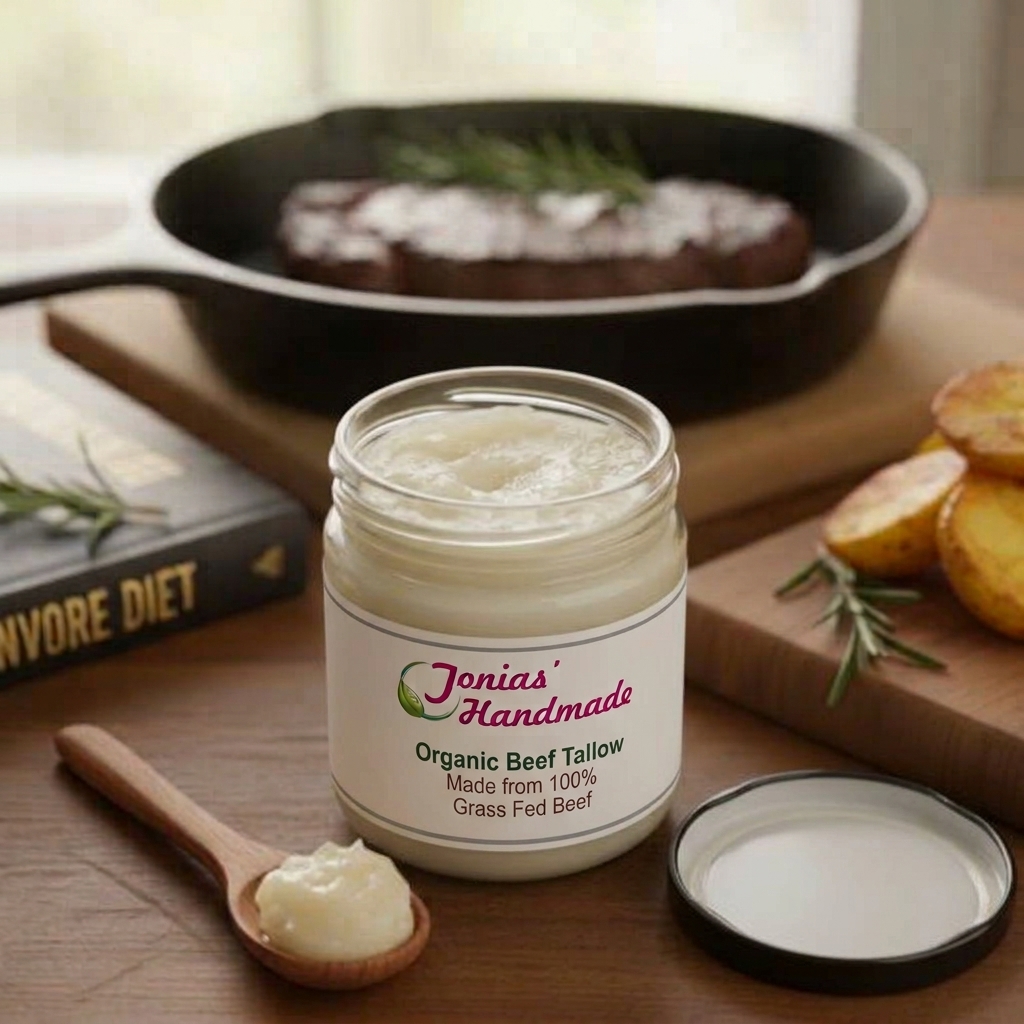
Quick Answer: What Is Tallow?
Tallow is rendered fat from cows or sheep, solid at room temperature and rich in vitamins A, D, E, and K. Grass-fed tallow is safe for both cooking (high smoke point) and skincare (mimics human sebum). It's shelf-stable, nutrient-dense, and has been used for thousands of years before modern alternatives replaced it.
So, What Is Tallow?
Tallow is rendered fat, typically from cows (beef tallow), sheep (mutton tallow), or other ruminants. It's solid at room temperature, shelf-stable, and full of nutrients like vitamins A, D, E, and K.
When it's grass-fed and minimally processed—like the products in my shop—it becomes both food-grade and skincare-grade.
Tallow for Skincare
Tallow isn't just natural—it's biologically familiar to our skin. Its fat profile closely mimics our own sebum, making it highly absorbable and ideal for nourishing the skin barrier.
Tallow vs Coconut Oil: Which Is Better for Skin?
| Feature | Tallow (Grass-Fed) | Coconut Oil |
|---|---|---|
| Fatty acid profile | Similar to human sebum | Very different from sebum |
| Comedogenic rating | 0–2 (low risk) | 4 (high risk of clogging pores) |
| Vitamins | A, D, E, K (naturally occurring) | E, K (minimal A, D) |
| Best for | Face, body, sensitive skin, eczema | Body only (too heavy for face) |
Try These:
-
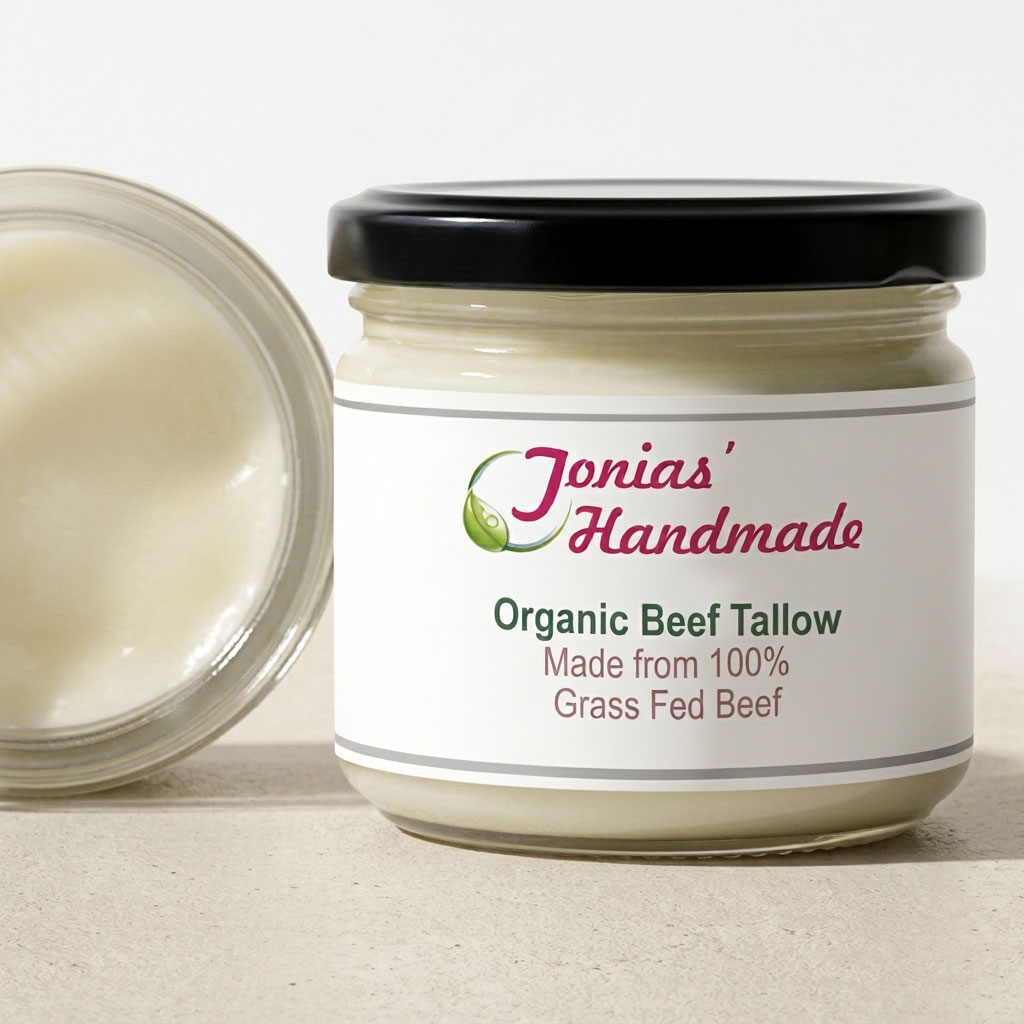
Organic Grass Fed Beef Tallow
Pure, nutrient-rich beef tallow rendered at low heat to preserve its skin-healing properties. -
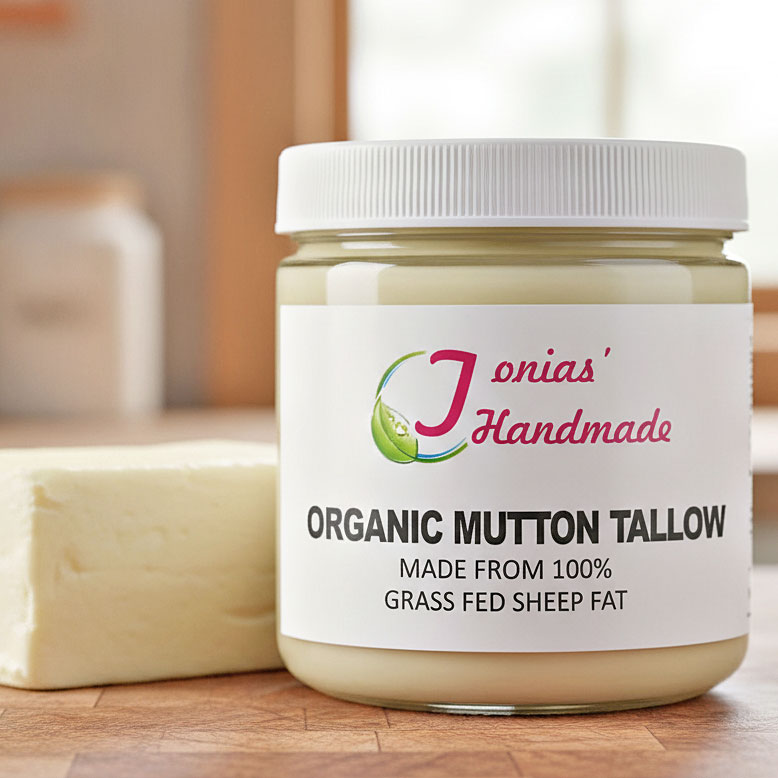
Organic Grass Fed Mutton Tallow
The closest to skin sebum, mutton tallow from grass-fed sheep. -
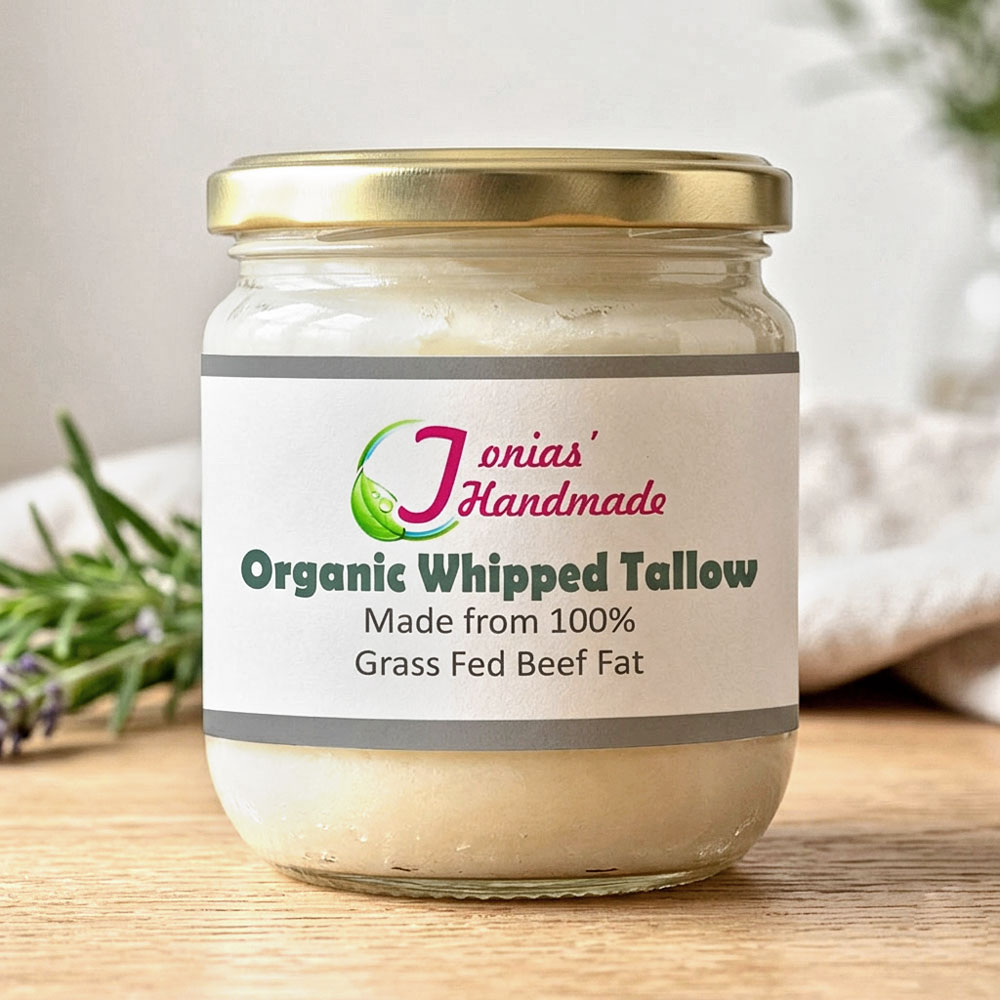
Organic Whipped Tallow Balm Cream
Light, fluffy, and easy to apply. Great for dry, irritated, or sensitive skin. -
Beef Tallow Lotion - Organic Grass Fed
A lotion crafted with tallow and jojoba oil—hydrating without clogging pores.
-
Carnivore Sunscreen – Tallow with Zinc Oxide
Sun protection without chemicals, using tallow as the nourishing base.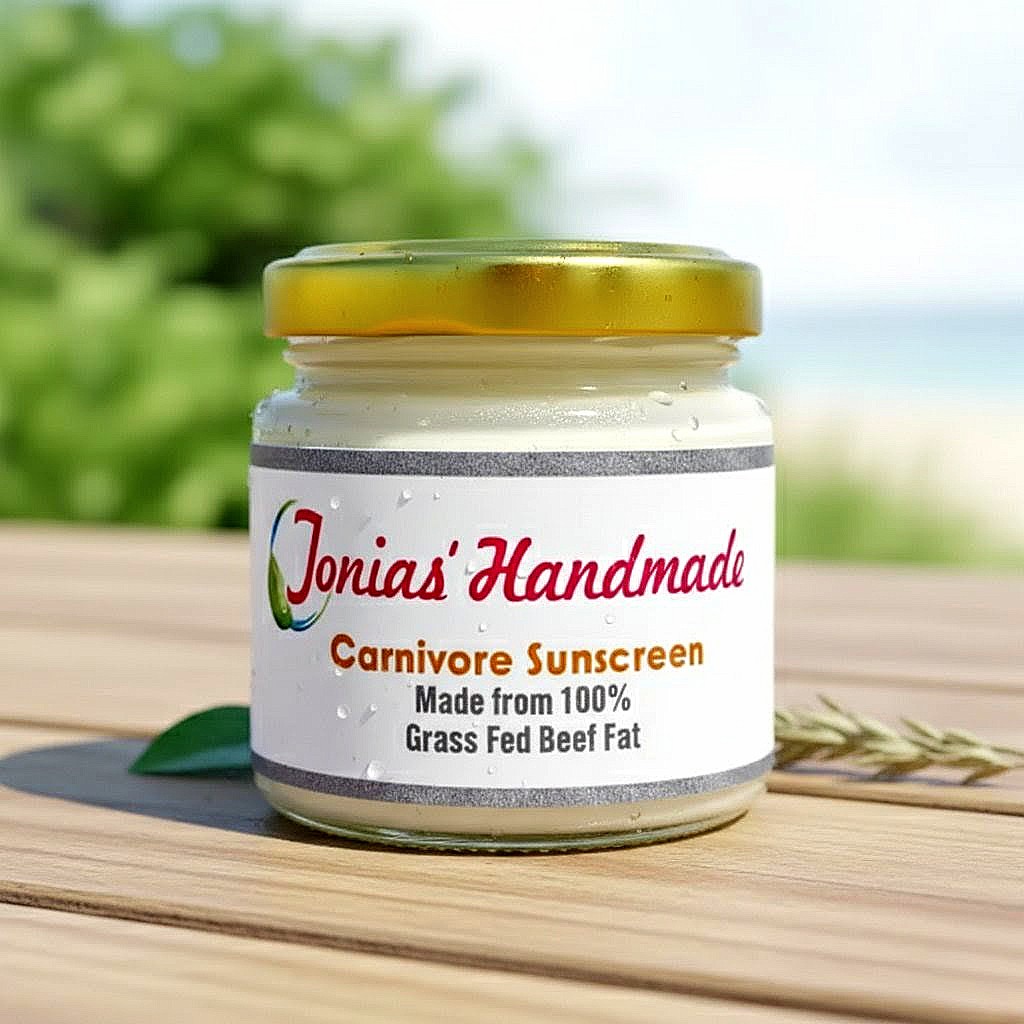
-
Tallow Cleansing Balm
A gentle facial cleanser and makeup remover with only three ingredients: tallow, jojoba oil, and a natural emulsifier.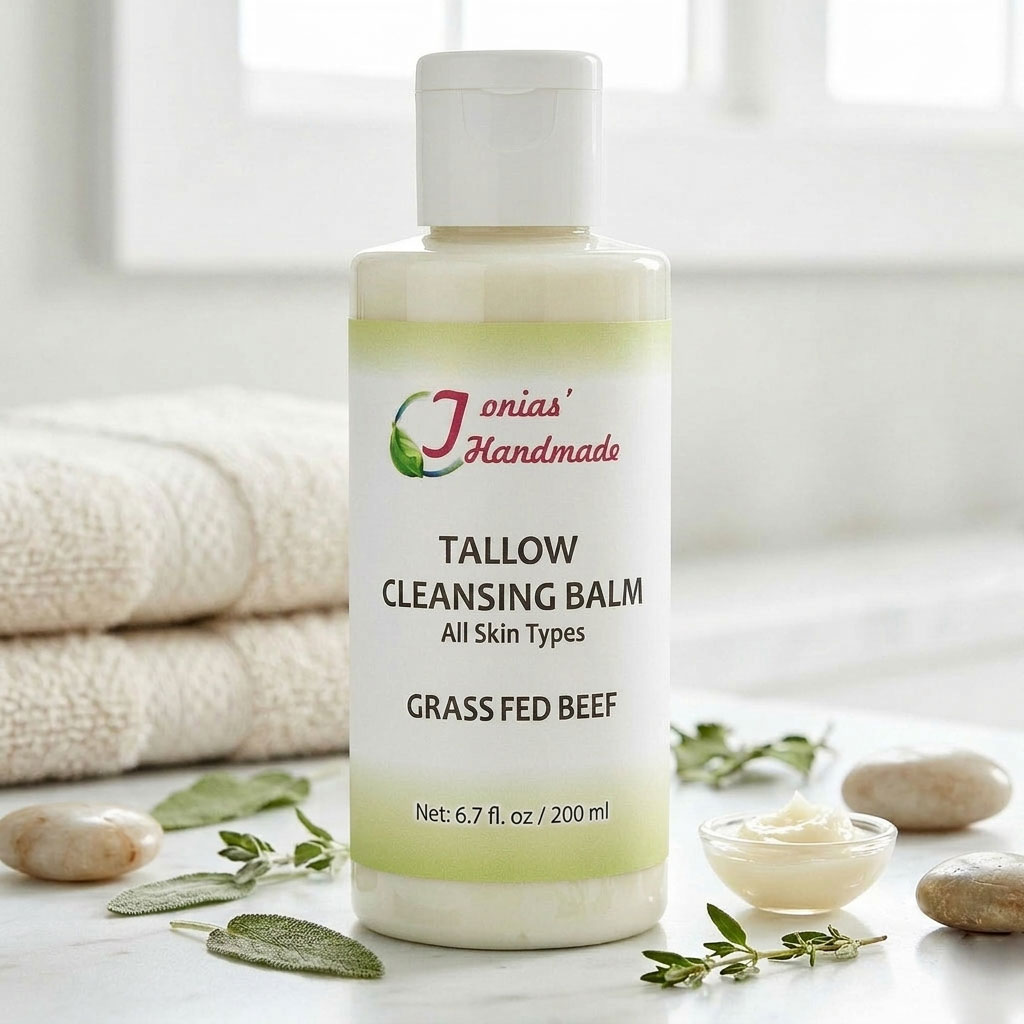
All products are handmade to order and packaged in glass or PET jars for freshness and sustainability.
Who Should Avoid Tallow?
While tallow is safe for most people, it may not be ideal if:
- You have very oily, acne-prone skin: Tallow is rich and may feel too heavy. Start with a small patch test.
- You're vegan or vegetarian: Tallow is an animal product. Plant-based alternatives like shea butter or jojoba oil may work better.
- You're allergic to beef or lamb: Though rare, some people with severe meat allergies may react to topical tallow.
- You prefer lightweight, gel-based moisturizers: Tallow is richer and takes longer to absorb than water-based products.
Bottom line: Patch test first! Apply a small amount to your inner arm and wait 24 hours before using on your face.
How to Tell If Tallow Is High Quality:
- Color: Should be creamy white to pale yellow (not gray or brown)
- Smell: Mild, slightly nutty or buttery (not strong or gamey)
- Texture: Firm at room temperature, melts easily on skin
- Source: Must be 100% grass-fed (not grain-fed)
- Processing: Dry-rendered at low heat (not chemically extracted)
- Ingredients: Should be just "beef tallow" or "mutton tallow"—no additives
Red flags: Hydrogenated tallow, added preservatives, or "partially hydrogenated" on the label.
Tallow in the Kitchen
Tallow isn't just a skincare miracle—it's a powerhouse cooking fat too.
High Smoke Point: Ideal for frying, searing, and roasting (up to 480°F / 250°C)
Nutrient-Rich: Especially when sourced from pasture-raised animals
Zero Refinement Needed: Unlike industrial seed oils
Flavorful: Adds depth to dishes without overpowering them
Favorites from the shop:
-
Organic Grass Fed Beef Tallow – Use it for frying eggs, roasting veggies, or crisping up potatoes.
-
Mutton Tallow Organic - Grass Fed Sheep Fat – Slightly gamier flavor, excellent for high-heat cooking and savory dishes.
Bonus: What About Lard and Schmaltz?
Not all animal fats are tallow. You might also love:
-
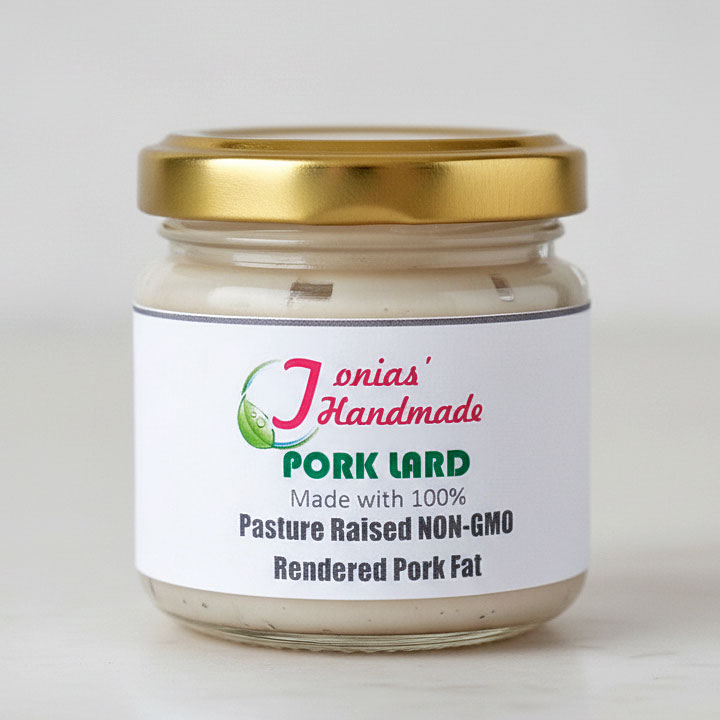
Organic Lard - Pasture Raised Pork Fat – Softer and creamier than tallow. Use it in pie crusts or as a body moisturizer.
-
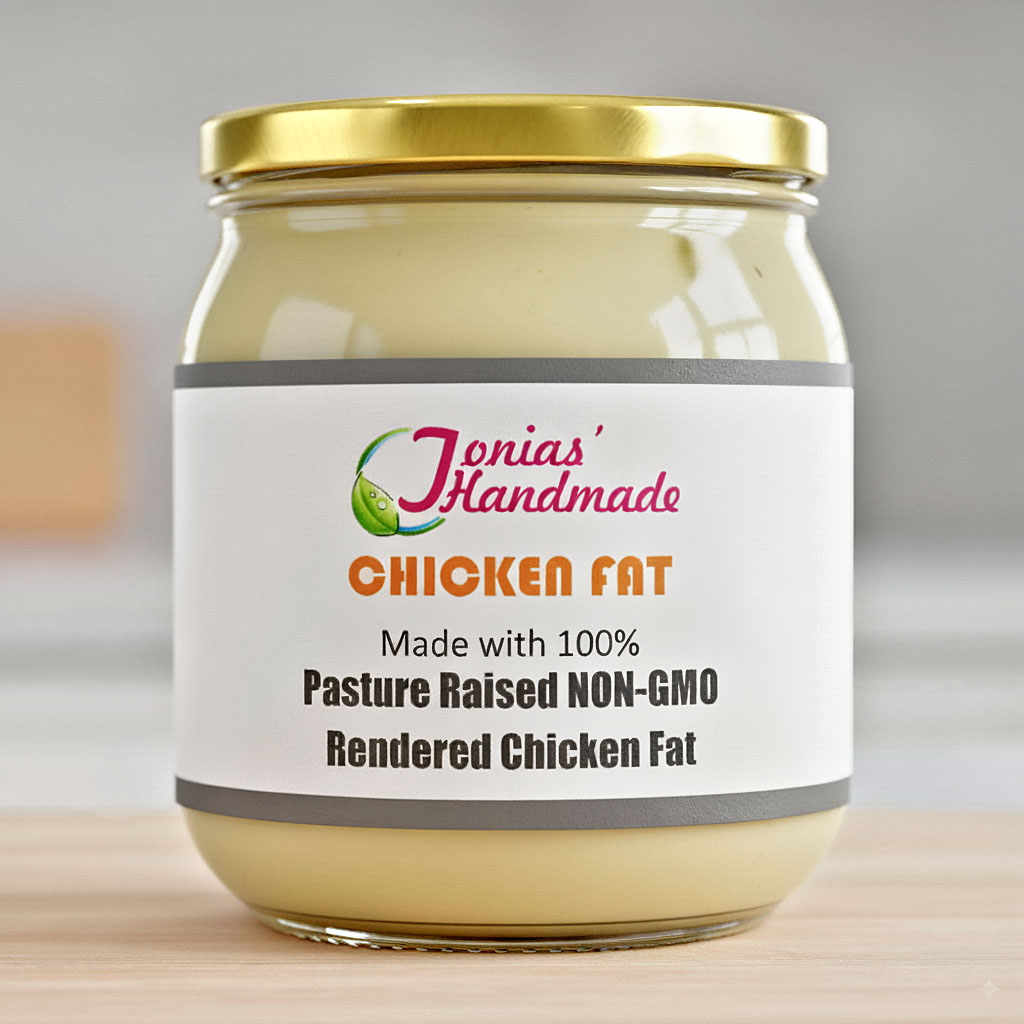
Organic Chicken Fat, Schmaltz – Rich, buttery flavor for cooking; ultra-soft texture for skincare and lip balm.
Final Thoughts
Tallow has been used for thousands of years—our grandparents and great-grandparents cooked with it and put it on their skin long before modern products existed. Whether you're nourishing your skin or crisping up potatoes, you're using something real and effective.
Ready to try real, grass-fed tallow? All our products are handmade to order, 100% grass-fed, and available in both food-grade and skincare-grade.
Frequently Asked Questions About Tallow
What is tallow?
Tallow is rendered animal fat, most commonly from beef or sheep. It's solid at room temperature and rich in nutrients like vitamins A, D, E, and K. When made from grass-fed animals, tallow is both food-grade and skincare-safe.
Is tallow good for your skin?
Yes. Tallow closely mimics human sebum, making it highly absorbable and skin-compatible. It hydrates deeply, supports the skin barrier, and helps with conditions like eczema, psoriasis, and dryness—without clogging pores.
Can I use tallow on my face?
Absolutely. Many people use whipped or pure tallow as a daily moisturizer. It's especially helpful for sensitive or aging skin. Choose an unscented version for facial use to avoid irritation.
Try: Organic Whipped Tallow Balm Cream
How do you use tallow in cooking?
Tallow can be used just like oil or butter. It's perfect for frying, roasting, and baking due to its high smoke point (up to 480°F / 250°C). It adds a savory depth to dishes without overpowering them.
Try: Organic Grass Fed Beef Tallow
Is tallow better than coconut oil or shea butter for skincare?
Yes, especially for skin that's dry, sensitive, or damaged. Unlike plant oils, tallow shares a similar fatty acid profile to human skin, which means it absorbs more effectively and nourishes more deeply.
Does tallow clog pores?
No. High-quality grass-fed tallow is non-comedogenic, meaning it won't clog pores. It actually helps balance your skin's natural oil production.
Is tallow safe for babies and kids?
Yes. Because tallow is natural, gentle, and free from synthetic additives, it's ideal for babies' delicate skin. It can be used as a diaper balm, moisturizer, or protective barrier.
Choose fragrance-free versions for young children.
Does tallow have a smell?
Pure tallow has a mild, natural scent—similar to butter or a light nutty aroma. Whipped and infused tallow products can be scented with essential oils if desired.
How should I store tallow products?
Store in a cool, dry place away from direct sunlight. Avoid using wet fingers to scoop from the jar, as preservative-free formulas are prone to mold when contaminated with water.
Does tallow expire?
Yes, but it has a long shelf life. Properly stored tallow lasts 12–18 months at room temperature and up to 2 years in the fridge. If it develops an off smell or discoloration, discard it.
Can I eat tallow if I'm lactose intolerant?
Yes! Tallow is pure fat and contains no lactose or dairy proteins. It's safe for people with lactose intolerance or milk allergies.
Is tallow keto or carnivore diet friendly?
Absolutely. Tallow is 100% animal fat with zero carbs, making it perfect for keto, carnivore, and ancestral diets.
Why is tallow so expensive?
Quality tallow requires grass-fed animals, low-heat rendering, and careful processing. Cheap tallow is often grain-fed or chemically extracted. Our tallow is 100% grass-fed, dry-rendered, and handmade in small batches.
Where can I buy quality tallow?
You can find small-batch, handmade, food-grade and skincare-grade tallow products right here:
What's the difference between tallow, lard, and chicken fat?
The main difference lies in the animal source and texture:
- Tallow comes from beef or sheep fat. It's firm at room temperature, has a high smoke point, and is rich in skin-nourishing vitamins like A, D, E, and K.
- Lard is rendered fat from pigs. It's softer and creamier than tallow, with a more neutral flavor. Ideal for baking and moisturizing.
- Chicken fat (schmaltz) is very soft and spreadable. Rich, savory flavor for cooking and excellent for soft skin applications.
All three are natural, ancestral fats with amazing benefits when sourced from pasture-raised animals.